
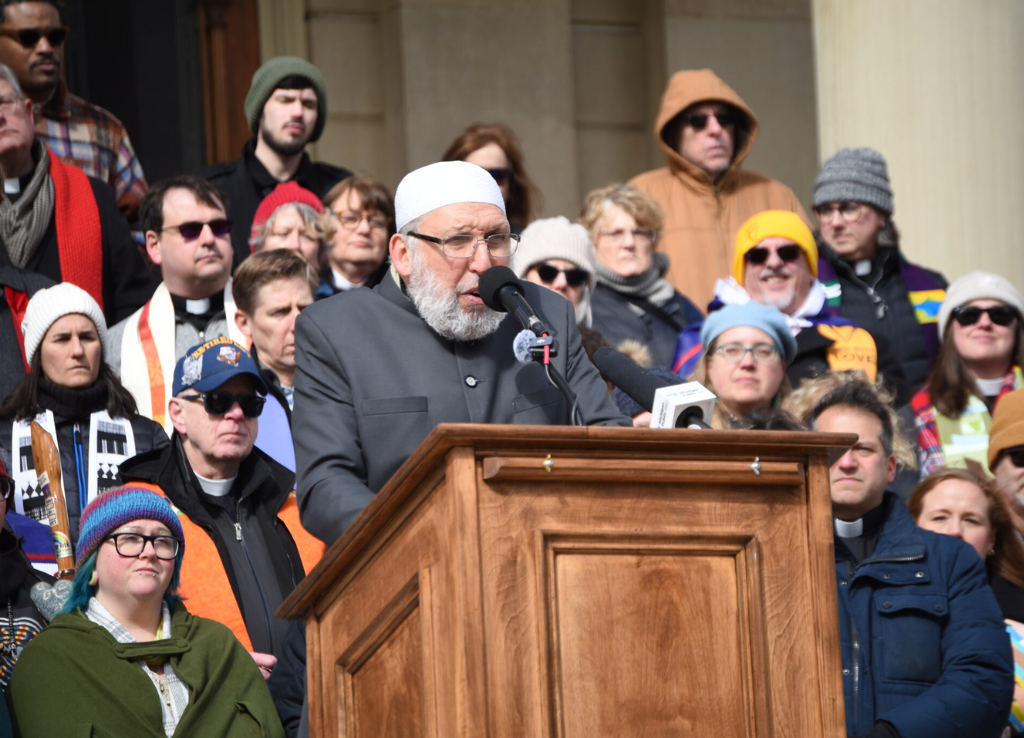
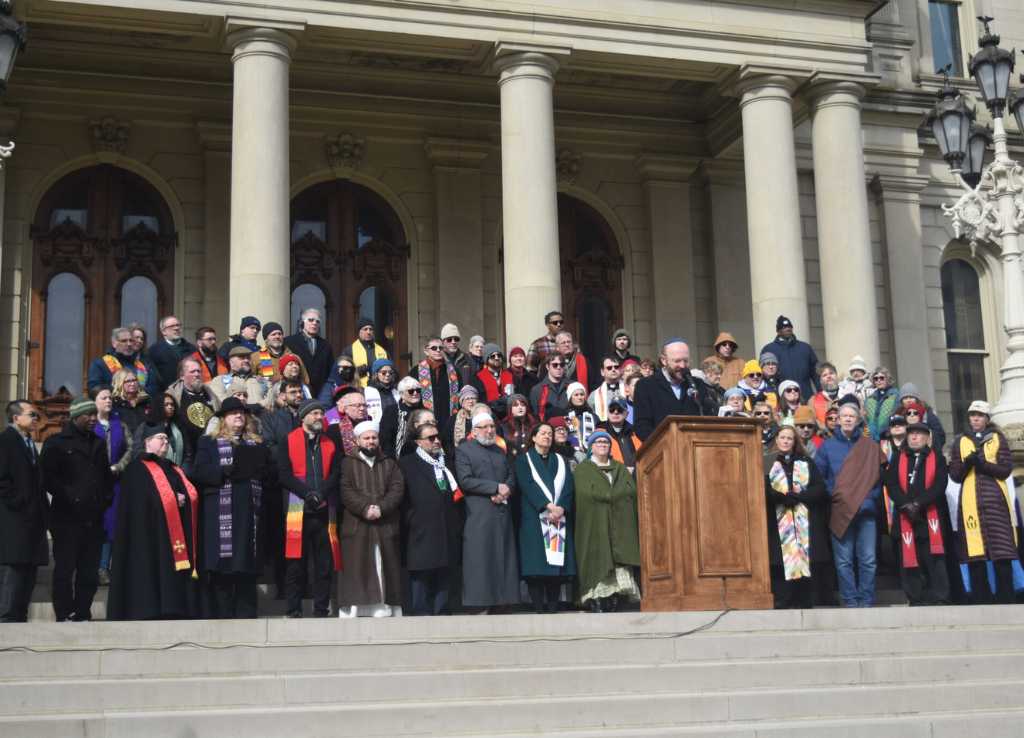
A group of 100 faith leaders across religious backgrounds gathered on the steps of the Michigan Capitol building on Tuesday with three demands to counter the presence of ICE in Michigan: the closure of all ICE detention centers and stoppage of construction of new ICE facilities in the state, an end to local law enforcement cooperation with ICE, and the passage of a bill package in the Michigan Legislature that would limit federal immigration actions.
“Today we draw a line in the sand,” said Imam Mustapha Elturk, the president of the Islamic Organization of America and co-chair of the Imams Council of Michigan. “This is not merely a matter of policy preference. It is a constitutional and moral imperative. We, the Michigan multifaith clergy, demand the immediate closure of ICE detention centers and a halt to the acquisition or expansion of such facilities.”
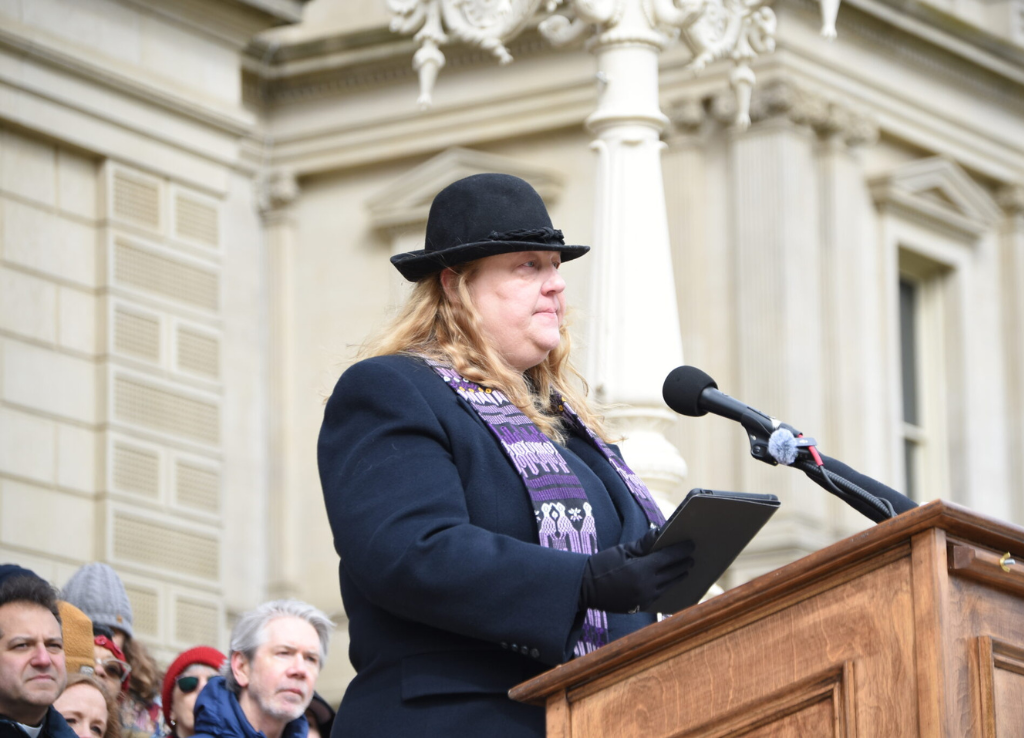
Rev. Karen Fitz, pastor of North Kent Presbyterian Church in Rockford, Mich. and the founder of West Michigan Clergy Action, emphasized the importance of having religious leaders across different faiths and denominations making the same demands — adding that across faith traditions, these leaders are speaking “with one voice.”
“Compassion is not complicated. Courage is not complicated,” Fitz said. “Pass these bills, protect our sacred spaces, require judicial warrants, and end the cowardice of masked ICE agents hiding from accountability, because if your policies cannot stand in the light, they should not stand at all.”
Speakers throughout the event reiterated their support for proposed legislation that would ban immigration enforcement in certain sensitive locations, prohibit state disclosure of personal information to immigration agents, and limit the use of masks by federal law enforcement. While the bills have a path through the Democratic-controlled Senate, the GOP-led House is unlikely to take them up.
Rabbi Ethan Bair of the Beth Israel congregation in Ann Arbor emphasized the importance of keeping ICE agents out of houses of worship, schools and hospitals
“Everyone has freedom to pray without fear, and we must be able to live out our religious duty to love and protect fellow human beings made in the image of God without retribution,” Bair said. “No one deserves to live in fear from unjust government policies upholding human dignity and ethical treatment.”
Bair also cited the Book of Leviticus to support the bills, quoting, “If you will only do something in a mask, it is a sign better not to do it at all.”
Allee Redfern, a seminarian at Chicago Theological and a Wiccan practitioner, called the moment a “moral and civic turning point,” demanding an end to 287(g) agreements, which formally allow local police departments to work with ICE for immigration enforcement, as well as any other collaboration with ICE by any local, state or university police.
“In this multifaith space, we speak with one voice to name the harm and demand that our Michigan elected officials take action to put an end to the inhumane and unjust systems causing this harm,” Redfern said.
The demonstration was held amid an expansion of ICE presence, both nationwide and in Michigan, including new and expanded administrative offices used by ICE in Southfield, Detroit and Grand Rapids. Also in the planning stage is a detention facility in Romulus, on top of an existing ICE detention facility in Baldwin.
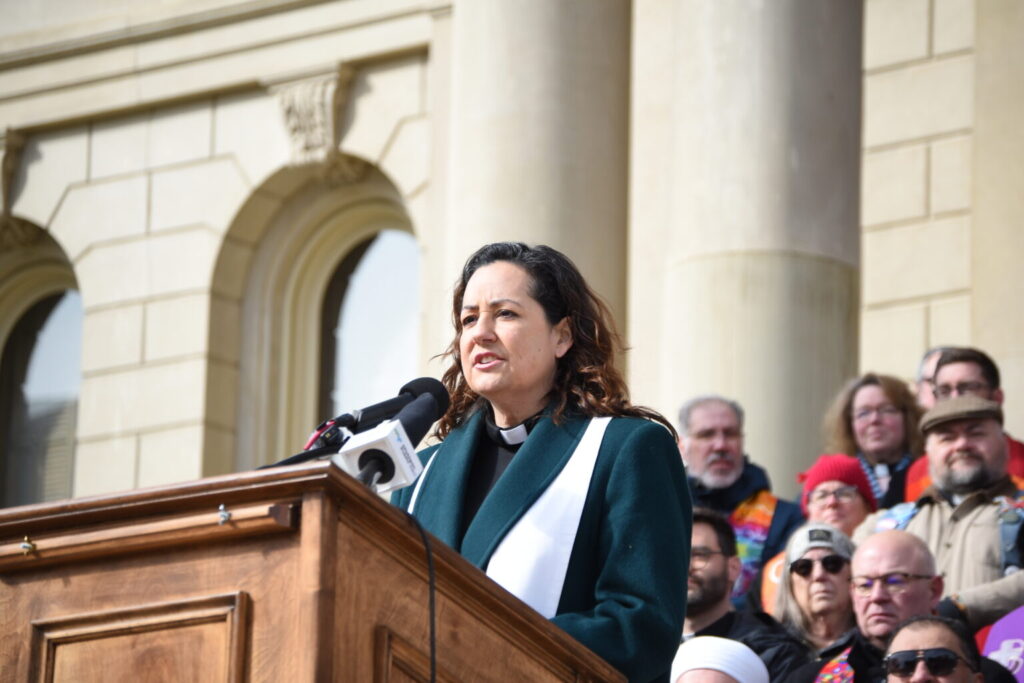
“What is at stake here is not just policy, it is who we are,” said Rev. Shannon Jammal-Hollemans, the pastor of First Congregational United Church of Christ in Lowell. “Will we be complicit in harm or courageous in our solidarity? Will we look away, or will we stand alongside our neighbors? The bills before our state Legislature are about protecting sacred spaces, ensuring accountability, and upholding human dignity. This is not abstract.”
Bringing clergy members together was celebrated by Simón Cardona Perazza, a member of MI Poder, a nonprofit organization supporting Michigan’s Latinx population, who also spoke at the demonstration
“Faith leaders are showing up. Local leaders are speaking out,” he said. “Residents and communities are organizing to protect one another, and together, we are demanding a different future, one rooted in dignity, transparency, and accountability. This is why we’re calling on our state leaders to act.”