
[DETROIT, MI — October 23, 2026] Religious leaders representing Christian, Jewish, and Muslim communities gathered Thursday, October 22, at Central United Methodist Church in Detroit to speak with one voice against religious prejudice, Islamophobia, and the use of religious identity as a weapon of political exclusion.
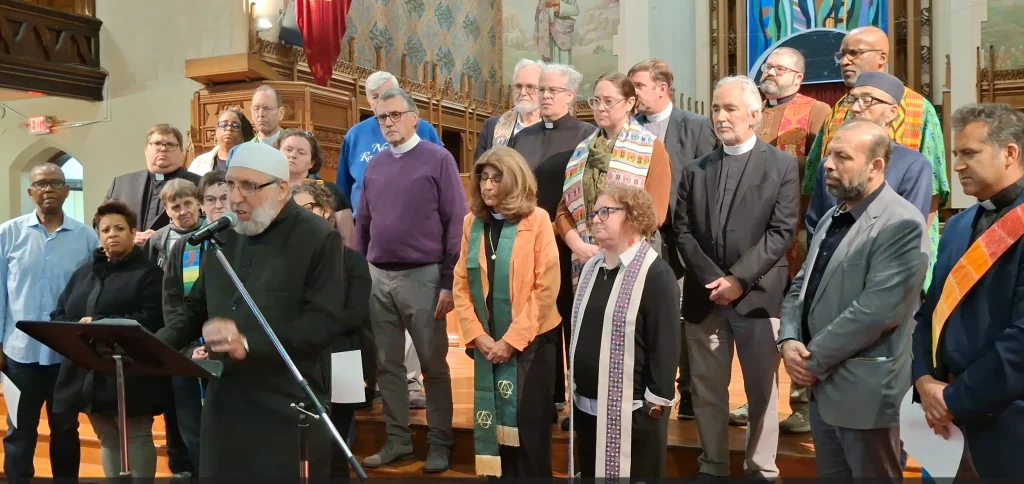
The interfaith press conference brought together approximately 30 clergy and faith leaders who expressed concern over religiously charged rhetoric surrounding Michigan’s U.S. Senate race and its broader implications for religious freedom, civic participation, and the safety and dignity of American families.
Among the speakers were Rev. Paul Perves, Pastor of Central United Methodist Church; Rabbi Alana Alpert of Congregation T’chiyah in Detroit; Rev. Louis Forsythe II, Senior Pastor of Pleasant Grove Missionary Baptist Church; and Imam Mustapha Elturk, Ameer of the Islamic Organization of North America (IONA).
While the gathering addressed concerns arising during the current election season, the religious leaders emphasized that their message was nonpartisan. They neither endorsed nor opposed any candidate or political party. Rather, they affirmed a fundamental American principle: no person’s religious beliefs should be used to question their loyalty, citizenship, or fitness for public service.
Religious Freedom Belongs to Every American
Rev. Paul Perves emphasized the importance of solidarity across religious differences.
“We pray differently. We read different scriptures. We do not agree on every question of faith, or of politics. But we stand here together because we agree on this: no American should ever be told that their faith makes them less American.”
He reassured Muslim Americans that their Christian and Jewish neighbors stand beside them in defending their religious freedom.
“You belong. Your faith does not make you less American. And when your freedom is threatened, we will stand beside you.”
The gathering emphasized that the First Amendment protects the free exercise of religion for all Americans, regardless of whether their faith represents a majority or minority tradition.
Article VI of the United States Constitution further prohibits religious tests as qualifications for public office. The leaders affirmed that political candidates may and should be evaluated on their qualifications, policies, character, and public records, but never disqualified or regarded with suspicion merely because of their religious identity.
The leaders affirmed that political candidates may and should be evaluated on their qualifications, policies, character, and public records, but never disqualified or regarded with suspicion merely because of their religious identity.
Standing Together Against Islamophobia and Antisemitism
Rabbi Alana Alpert, a Detroit-based rabbi, community organizer, and civil rights advocate, drew attention to the historical consequences of questioning the loyalty of religious minorities.
“We know how quickly ‘Are they loyal?’ becomes ‘Do they belong?’ And we know how quickly that becomes something far worse.”
Reflecting on the history of antisemitism and accusations of dual loyalty directed against Jewish communities, Rabbi Alpert expressed solidarity with Muslim Americans facing similar prejudice.
“Antisemitism and Islamophobia are not separate fights. When one is tolerated, the other is emboldened.”
She concluded with a powerful expression of solidarity: “Your fight is our fight. We will not stand idly by.”
Her remarks underscored a central theme of the gathering: hatred directed against one religious community threatens the freedom and security of all communities.
A Moral Responsibility to Defend Our Neighbors
Rev. Louis Forsythe II, Senior Pastor of Pleasant Grove Missionary Baptist Church, reminded those present that differences in political beliefs must never become an excuse for indifference toward discrimination.
“We can disagree on politics. We can vote differently. But we cannot be silent when our neighbors are made to feel like strangers in their own home. That is not who Michigan is, and it is not who we are called to be.”
His remarks reflected the shared conviction that defending the dignity of one’s neighbors is not simply a political position but a moral responsibility.
Faith Must Never Be Treated as Evidence of Disloyalty
Imam Mustapha Elturk, Ameer of the Islamic Organization of North America (IONA), spoke about the personal and emotional consequences of religious prejudice, particularly for Muslim families and children.
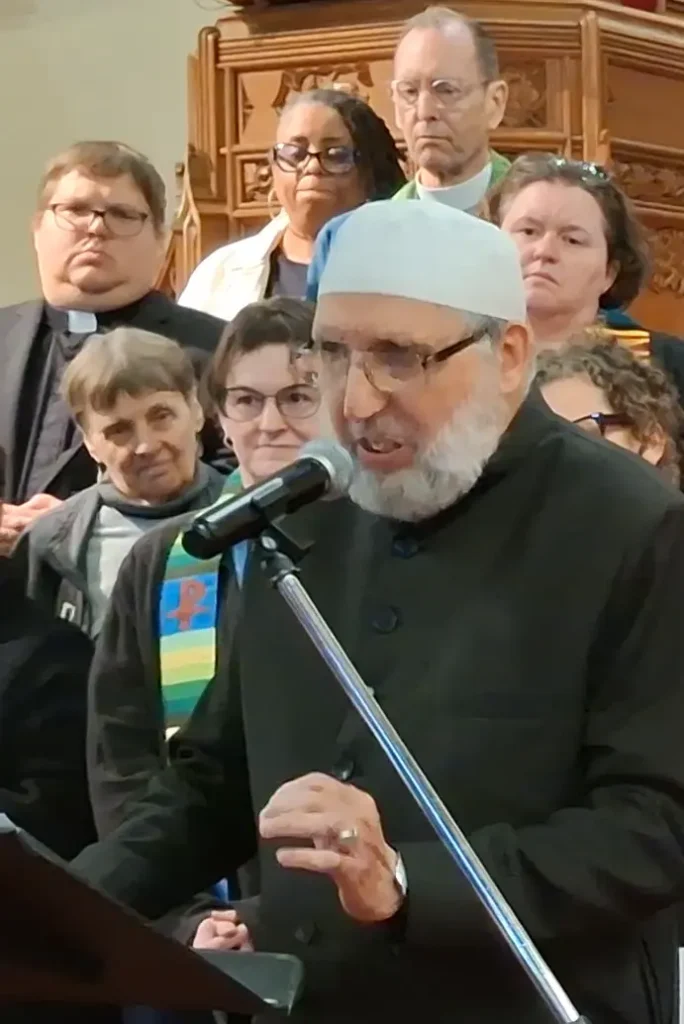
“When a person’s faith is treated as evidence of disloyalty, every Muslim family hears that message. Our children hear it. They come home from school and ask: Are we really American?”
Addressing that question directly, Imam Elturk declared:
“Yes. You are American.”
He emphasized that Muslim Americans enjoy the same constitutional protections and responsibilities as their fellow citizens.
“Our faith is protected by the same Constitution that protects every other faith. Article VI says no religious test, ever.”
Imam Elturk continued: “We do not ask anyone to agree with our beliefs. We ask only for what the Constitution already promises: to be judged by our character and our record, not by our prayers.”
He stressed that religious discrimination extends far beyond the political arena. Its consequences are felt in schools, workplaces, neighborhoods, and homes.
Words spoken by public figures can either strengthen mutual respect or deepen suspicion and division. Religious and political leaders therefore bear a particular responsibility to promote understanding rather than prejudice.
A United Declaration Against Religious Hatred
Standing together, the approximately 30 participating clergy and religious leaders affirmed their collective commitment to religious freedom and the protection of every community from hatred and discrimination.
In a joint declaration, they stated:
“We will not allow hatred to define our democracy.
We will not allow religion to become a weapon of political exclusion.
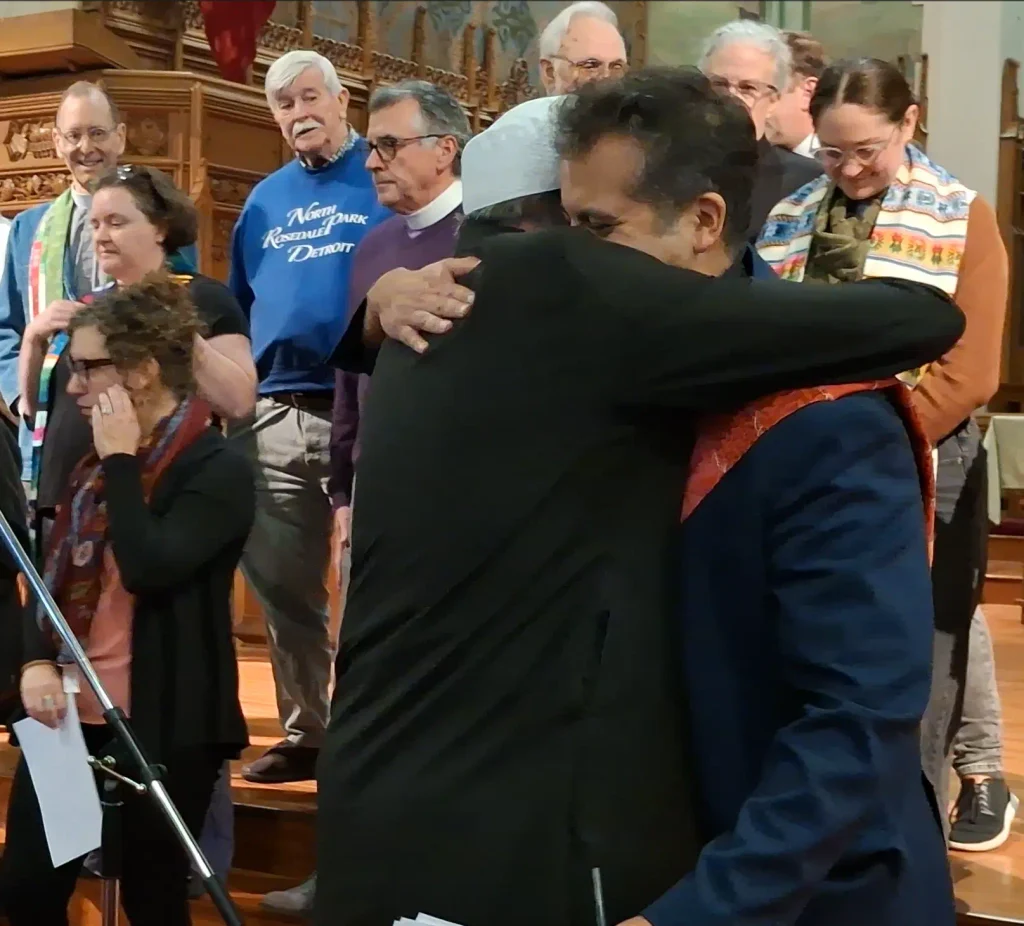
And we will not stand silently while our neighbors are made to feel like strangers in their own country.”
The gathering served as a reminder that religious freedom cannot be defended selectively. The constitutional rights of one community are inseparable from those of every other community.
Although the participating leaders represented different religious traditions, they stood united in the conviction that human dignity, freedom of conscience, and equal citizenship must be protected for all.
Their message was clear: disagreement is a legitimate part of democratic life; religious bigotry is not.
The leaders concluded with a shared commitment: “We stand together because we refuse to wait until it is too late.”
END